

Not Every Brand Belongs in Every Package
It sounds simple, yet it is surprisingly often ignored in practice. Just because two companies share similar target groups or operate in the same segment doesn’t mean they will perform well in the same box.
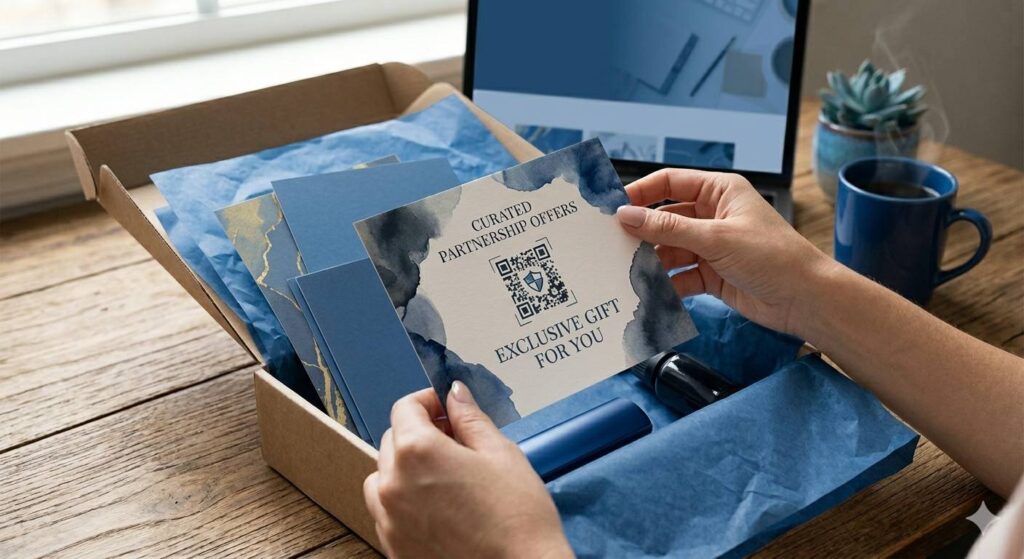
Online, brands constantly compete with banners, pop-ups, and notifications. Attention is fragmented. But when opening a parcel, there is a rare moment of undivided focus: just the customer and the content in front of them.
This moment is highly sensitive. An insert must not feel like random promotional material; it must feel like a curated recommendation, a tip for a shop that perfectly resonates with the person who just made this purchase.
When you appear in another brand’s package, you aren’t just borrowing reach. You are borrowing trust. And that trust must be handled strategically.
Success Depends on the Sender-Insert Fit
The ultimate benchmark isn’t whether two brands generally “like” each other. It’s whether the insert fits the sending brand. The sender has built the relationship, established the trust, and triggered the purchase. The insert enters this established “trust zone.”
If there is no recognizable connection, the result is irritation. “Why is this here? What does this have to do with my order?” These subconscious questions determine whether an insert is perceived as a helpful tip or an annoying disruption.
Good matching means the insert meaningfully extends the sender’s brand world. It complements it without diluting it. It feels like a logical next step.
Trust is borrowed and must be earned
A common mistake is defining “matching” solely through categories. Two brands in the same segment don’t automatically fit. In fact, two luxury skincare brands in one box might compete rather than complement each other.
Conversely, brands from different industries can harmonize perfectly. A yoga wear brand and a meditation app serve the same need for balance. A home-office shop and a premium coffee provider meet the same situational context. It’s not about the category; it’s about the consumer’s reality.
3 Key Questions for Strong Matching
Before a cooperation is launched, we at Affiliprint ask these three questions:
- Does the insert fit the sender’s brand world?
- Does it match the customer’s mindset in this specific purchase moment?
- Does it reinforce existing trust instead of interrupting it?
The future of parcel inserts
Want to gain even more insights?
Our white paper provides you with a comprehensive guide to:
- Proven strategies
- Current study results
- Deep knowledge
- Easy & understandable
From Strategy to Execution: How We Work
In practice, we start by looking at the target audience, independent of timing or budget. Who is ordering? What are their interests, age groups, and price sensitivities?
Only then do operational factors come into play:
- Timing: When does the campaign run, and which publishers have capacity?
- Format: Can the publisher accommodate specific requirements like A5?
- Budget: Finding the sweet spot between strategic sense and economic efficiency.
- Integrity: We strictly exclude direct competitors and respect publisher “blacklists” to protect the sender’s brand.
The Power of Partnership: die Markenkuppler & Affiliprint
Great matching doesn’t end with choosing a publisher; it starts much earlier. That is why we treat this topic in cooperation with die Markenkuppler. As a boutique consultancy for strategic brand cooperations, they don’t just “bring brands together.” They systematically check whether goals, values, and narratives truly align.
While die Markenkuppler handle the strategic brand-to-brand matching and define which combinations make sense conceptually, Affiliprint takes over the channel-specific execution. We ensure this match becomes visible in the right environment and with the right publisher, format, and operational structure.
This synergy turns a simple insert idea into a sophisticated, high-performance cooperation.

Conclusion: Matching is Core Strategy
Inserts don’t work just because they are physical. They work because they are placed in the right environment. The sender sets the tone and the expectation. Every insert must respect and enhance that space.
If you want to find out which inserts truly fit your brand and how to plan package cooperations strategically rather than randomly, let’s talk.