

The Role of Voucher Codes in Insert Marketing
When planning an insert marketing campaign, the focus often starts with the creative: the design, the offer, the message and the moment of delivery. But one of the most important decisions happens before the campaign ever reaches print: how should customers redeem the offer?
In many cases, this comes down to a simple choice. Should every customer receive the same generic voucher code, or should each insert carry its own unique code?
At first glance, this may seem like a small technical detail. In reality, the redemption mechanic can strongly influence how well a campaign can be measured, how much control the advertiser has over the offer and how easy it is for customers to respond. Both unique and generic codes can be effective, but they are built for different goals. The right choice depends on what the campaign needs to achieve.
Unique Codes: When Control and Tracking Matter
What Unique Codes are
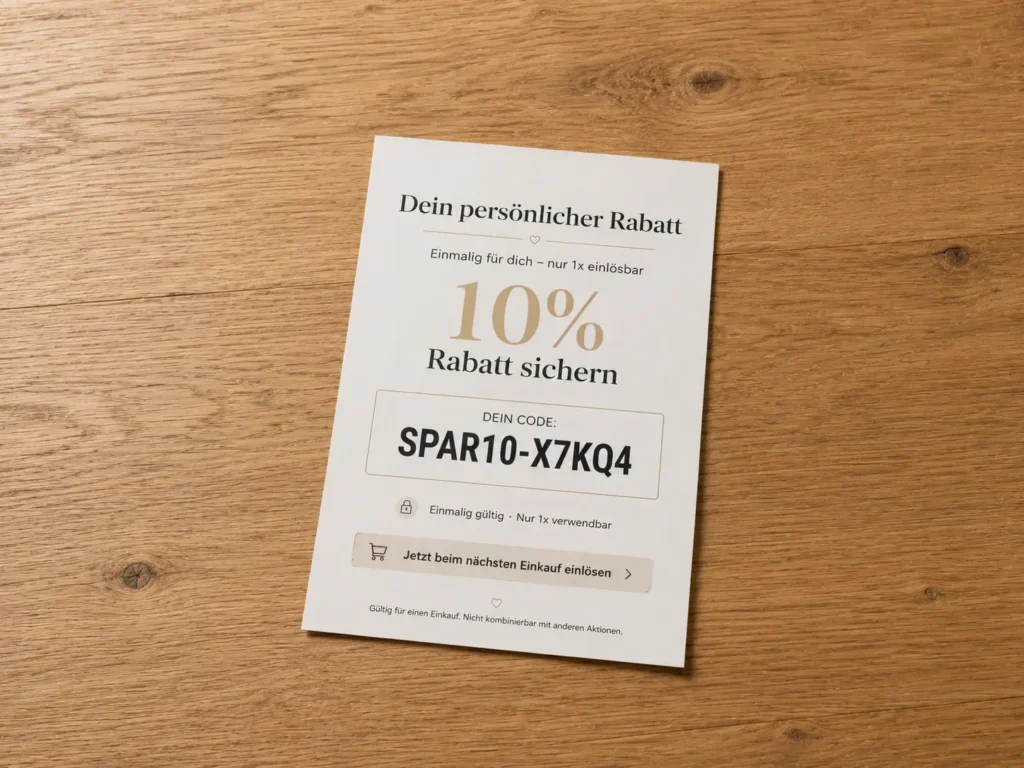
Unique Codes are individual voucher codes that are usually valid only once. Instead of using one shared code across the entire campaign, every insert receives its own code.
When these codes are properly mapped, redemptions can be linked back to a specific campaign, partner, distribution batch or campaign wave. This makes Unique Codes especially useful when advertisers want to understand exactly where results are coming from.
Why Unique Codes offer more control
Unique Codes are particularly useful for campaigns where control is important. For example, if a brand offers a high-value discount, a premium incentive or a free gift, it usually wants to make sure that the offer reaches the intended audience.
With a Generic Code, there is always a risk that the code is copied, shared publicly or picked up by coupon platforms. Once that happens, people outside the original campaign may start using the offer as well, including customers who might have bought anyway.
Unique Codes help reduce this risk. Because each code can only be redeemed once, the offer is much harder to spread at scale. This does not mean that misuse becomes impossible, but it does give advertisers a much stronger level of control.
For campaigns where margins matter, that control can make a significant difference.
Why Unique Codes improve campaign measurement
Another major advantage is measurement. Unique Codes make it easier to understand where redemptions are coming from and which parts of the campaign are performing best.
Advertisers can compare partners, campaign waves or distribution routes more accurately. These insights can then be used to improve future campaigns.
For performance-focused insert marketing, this is especially valuable. The insert is no longer just a physical touchpoint in the parcel. It becomes a measurable part of the marketing mix, with data that can support clearer decisions.
Generic Codes: When Simplicity and Reach Matter More
What Generic Codes are
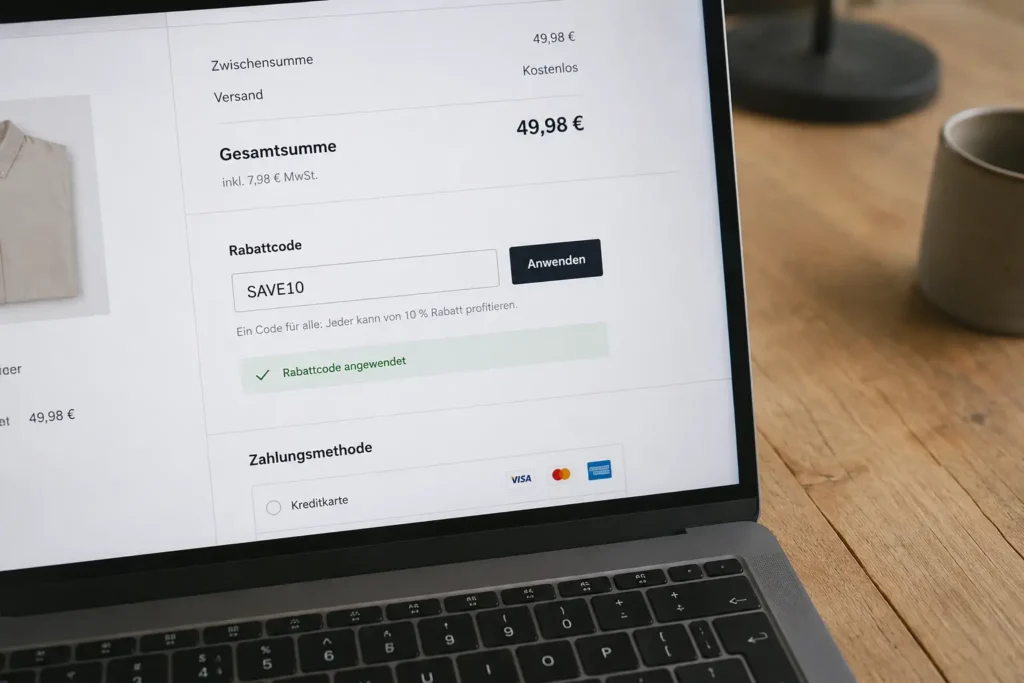
Generic Codes follow a simpler logic. Instead of giving every insert its own individual code, the campaign uses one shared code, such as SAVE20, SPRING2026 or another easy-to-remember phrase.
This makes Generic Codes easy to set up, easy to communicate and easy for customers to use.
Why Generic Codes are easier for customers
The main benefit is simplicity. Generic Codes are usually short, easy to read and easy to enter at checkout.
This can create a smoother user experience, especially in campaigns aimed at a broad audience or in cases where the offer does not require strict control.
For campaigns where the main goal is visibility, awareness or a low barrier to redemption, this simplicity can be a clear advantage.
How Generic Codes can still reduce public sharing
Generic Codes do not always have to look completely generic. They can also be designed in a way that makes them appear more individual, for example through longer, less obvious or campaign-specific code structures.
This can be a useful lever in insert marketing campaigns. When a code looks less like a broad public discount code, it is less likely to be shared openly or picked up by coupon platforms.
This can help reduce the risk of codes going “live” outside the intended campaign environment, while still keeping the setup simpler than a fully unique-code system.
A practical middle ground for advertisers
For advertisers, this creates a practical middle ground. The campaign remains easier to manage than a full Unique Code setup, but the risk of uncontrolled public sharing can be reduced.
At the same time, redemptions can still be evaluated cleanly, especially when different Generic Codes are used for different partners, campaign waves or distribution routes.
This gives advertisers more structure without making the campaign unnecessarily complex.
Where Generic Codes create extra reach
Generic Codes can also make sharing easier. If someone receives an offer but does not want to use it themselves, they can quickly pass the code on to a friend, partner or family member.
In some campaigns, this can create additional reach beyond the original parcel distribution. For brands that mainly want to increase visibility, drive awareness or promote a seasonal offer, that extra reach can be valuable.
The trade-off: less control
The trade-off is that Generic Codes are harder to control once they start circulating. A simple code is easy to use, but it is also easy to copy and share outside the intended audience.
This can make attribution less precise, because it becomes harder to know whether a redemption was driven by the insert itself, by word of mouth or by someone finding the code elsewhere.
That does not make Generic Codes a weaker option. It simply means they are better suited to campaigns where reach and ease of use are more important than strict tracking or margin protection.
Choosing the Right Code Strategy
Start with the campaign goal
In practice, the best choice usually depends less on the code itself and more on what the campaign is supposed to achieve.
If the campaign is built around performance, testing or a high-value offer, Unique Codes are often the stronger option. If the campaign is designed for broad visibility and easy redemption, Generic Codes can be a better fit.The right strategy starts with understanding the role the insert should play in the campaign.
When Unique Codes are the better fit
Unique Codes are often the better choice when control, tracking and offer protection are important. They allow advertisers to protect the offer more effectively and understand which partners or distribution routes generate the best response.
This is particularly relevant for more targeted distribution models, such as Smart Reach by ParcelDealz. When the audience selection is already precise, it often makes sense to use a redemption mechanic that offers a similar level of precision.
Unique Codes can help connect targeting, distribution and response in a clearer way.
When Generic Codes are the better fit
Generic Codes can be a better fit when the campaign is designed for broad visibility and a low barrier to redemption.
If the discount is moderate, the offer is easy to understand and the main goal is reach, a Generic Code can keep the campaign simple for both the advertiser and the customer.
This makes them especially useful for awareness campaigns, seasonal promotions or campaigns where sharing is part of the intended effect.
The middle ground
Advertisers do not always have to choose between one fully Generic Code and thousands of Unique Codes.
They can also use different Generic Codes for different partners, product categories or campaign waves. This does not provide the same level of detail as Unique Codes, but it still gives a basic view of where redemptions are coming from.
In addition, Generic Codes can be made to look more individual than they actually are. This helps brands keep the user experience simple, while reducing the chance that the code is perceived as a public voucher code and shared widely online.
Combining Both Approaches
Why a hybrid setup can make sense
For many brands, the most effective strategy is not to choose one mechanic for every campaign, but to use both depending on the situation.
A brand might use Unique Codes for selected partners, high-value offers, first-order incentives or performance tests where control and measurement are essential.
At the same time, it could use Generic Codes for broader campaigns where the goal is to create visibility, make the offer easy to share and reduce friction at checkout.
Flexibility across different campaign types
This hybrid approach gives advertisers more flexibility. Unique Codes provide precision where it matters most, while Generic Codes keep campaigns simple, accessible and easy to scale.
Instead of treating code strategy as a fixed decision, advertisers can adapt the setup to the objective of each campaign.
This makes the redemption mechanic more strategic and better aligned with the wider campaign goal.
How Friends Codes add extra value
Another option is to integrate Friends Codes into the campaign setup. Friends Codes can be used with both Unique and Generic Code strategies.
A customer who receives the insert can redeem the main offer themselves, while also receiving the option to share a separate code with a friend, partner or family member.
This adds a referral layer to the campaign without making the setup too complicated.
Turning one touchpoint into two potential sales
 Friends Codes create additional potential from one physical touchpoint. Instead of driving only one possible sale, the insert can encourage both the first recipient and a second person to engage with the brand.
For campaigns focused on acquisition, referral effects or broader reach, Friends Codes can therefore help increase the commercial value of the same distribution moment.
Used in the right way, Friends Codes can add a social layer to insert marketing. They support sharing, but in a more structured and measurable way than uncontrolled code forwarding.
Choosing based on the role of the insert
Ultimately, the question is not whether Unique Codes or Generic Codes are better. The more useful question is: what role should the insert play in the campaign?
If the priority is accurate tracking, controlled redemption and margin protection, Unique Codes are usually the better fit.
If the priority is simplicity, speed and broader reach, Generic Codes can be highly effective. And when a campaign needs both control and scale, a hybrid setup can offer a balanced solution.
The future of parcel inserts
Want to gain even more insights?
Our white paper provides you with a comprehensive guide to:
- Proven strategies
- Current study results
- Deep knowledge
- Easy & understandable
Conclusion
Voucher codes may seem like a small part of an insert marketing campaign, but they influence much more than the checkout process. They shape how the campaign is measured, how the offer is controlled and how easily customers can respond.
Unique Codes are useful when advertisers need more control, reliable tracking and stronger protection against unwanted code sharing. Generic Codes are helpful when the campaign should be simple, easy to use and easy to pass on.
At the same time, Generic Codes can be designed in a way that makes them appear more individual. This can help reduce the risk of public sharing while keeping the campaign easy to manage.
Friends Codes can add another layer by turning one parcel touchpoint into the opportunity for two potential sales.
The right choice depends on the offer, the audience and the campaign goal. For Affiliprint and ParcelDealz campaigns, a strong code strategy starts with one simple question: what should happen after the customer opens the parcel?
Want to find the right code strategy for your next insert campaign? Our team can help you choose the best setup for your goals, from precise performance tracking to broader awareness campaigns. Reach out to us today to start planning.